
Introduction
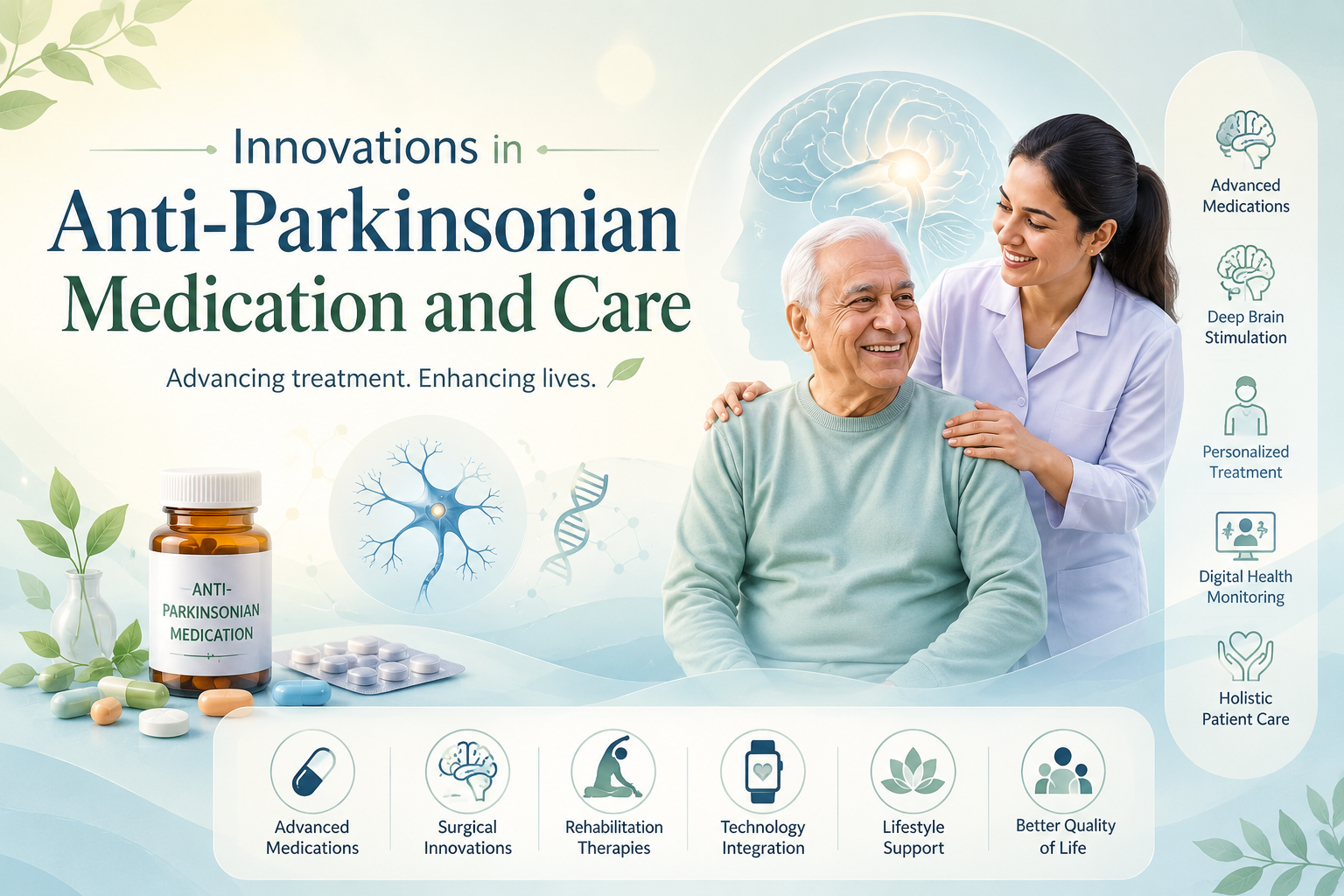
Parkinson’s disease is a condition that gets worse over time and affects how you move, your balance, and the way your muscles work. It happens when the nerve cells in your brain that make dopamine start to get damaged or die. Dopamine is a chemical that helps your body move and coordinate properly. As the levels of dopamine go down, people with Parkinson’s might start to notice symptoms like shaking, stiffness, moving slowly, and having trouble standing up straight.
Parkinson’s disease is a condition that has seen big improvements in treatment thanks to modern therapies. Even though we still don’t have a cure, new medicines and supportive care can really help people with the disease. They can stay mobile, independent, and have a better quality of life. The good news is that healthcare for the brain and nerves is getting better all the time, with safer, more effective, and personalized options becoming available. This means that people with Parkinson’s can get the help they need to manage their condition and live life to the fullest.
Understanding Parkinson’s Disease
Parkinson’s disease affects both physical and mental health. The most common motor symptoms include hand tremors, rigid muscles, slower body movements, and balance problems. Many patients also experience non-motor symptoms such as sleep disturbances, anxiety, depression, fatigue, and memory-related difficulties.
Parkinson’s disease is a condition that gets worse slowly over time. Each person with the disease has different symptoms, so their treatment needs to be unique. This means that doctors have to consider the person’s age, lifestyle, and how severe their symptoms are when deciding on the best treatment approach.
Getting a diagnosis early on and getting the right medical care can make a big difference in how well someone does in the long run. It can also help people do their daily things without as much trouble.
Modern Anti-Parkinsonian Medications
Levodopa Therapy
Levodopa remains one of the most effective medications used to treat Parkinson’s disease. It works by converting into dopamine inside the brain, helping improve movement control and reduce stiffness.
New versions of levodopa are made to help people feel better for longer and to stop their mobility from changing suddenly. This medicine is often given with carbidopa, which helps levodopa get to the brain without breaking down first. When you take these two together, it works better and you’re less likely to feel sick to your stomach.
Extended-release levodopa products now allow patients to experience more stable symptom management throughout the day.
Dopamine Agonists
Dopamine agonists work by copying the effects of dopamine in the brain, which helps to reduce symptoms like slow movement and muscle stiffness. They do this by directly stimulating the dopamine receptors in the brain, which can help people with certain conditions to move more easily and feel better.
Newer dopamine agonists are available in long-acting forms, including skin patches and extended-release tablets. These advanced formulations improve treatment convenience and reduce the need for frequent medication dosing.
Dopamine agonists are often used in early-stage Parkinson’s disease or alongside levodopa therapy.
MAO-B Inhibitors
Monoamine oxidase-B inhibitors work by stopping the breakdown of dopamine in the brain, which helps keep dopamine levels up. This can improve how dopamine works and might even slow down the worsening of symptoms that affect movement.
Modern MAO-B inhibitors are generally well tolerated and are commonly used during the early stages of Parkinson’s disease.
COMT Inhibitors
Catechol-O-methyltransferase inhibitors are medications that extend the effectiveness of levodopa therapy. They help maintain stable dopamine levels and reduce “wearing-off” symptoms between medication doses.
These medications are especially helpful for patients experiencing fluctuating symptom control during advanced stages of Parkinson’s disease.
Surgical Advancements in Parkinson’s Care
Deep Brain Stimulation
Deep brain stimulation is one of the most important advancements in Parkinson’s disease treatment. This surgical procedure involves placing small electrodes into specific regions of the brain that control movement.
The electrodes deliver controlled electrical impulses that help regulate abnormal brain activity. Deep brain stimulation can significantly improve tremors, stiffness, and movement fluctuations in selected patients.
Today’s deep brain stimulation systems are a lot better than the old ones – they’re more precise and can be programmed to meet the specific needs of each patient, giving healthcare providers the ability to tailor the treatment to what each person requires.
Minimally Invasive Procedures
Advanced imaging systems and robotic-assisted surgical techniques have improved the safety and precision of neurological procedures for Parkinson’s disease. These minimally invasive approaches reduce recovery time and improve long-term treatment outcomes.
Rehabilitation and Supportive Therapies
Physical Therapy
Physical therapy is an essential part of Parkinson’s disease management. Regular exercise helps improve flexibility, posture, muscle strength, and walking ability.
Therapists teach patients movement strategies that improve balance and reduce stiffness. Activities such as walking, stretching, yoga, and low-impact exercise can help maintain mobility and independence.
Speech and Occupational Therapy
Speech therapy is really helpful for people who need to improve how clearly they can speak, get better control over their breathing, and make swallowing easier. On the other hand, occupational therapy is great because it teaches people how to do everyday things like getting dressed, writing, and cooking in a way that’s safer and more efficient for them.
These therapies can really help people with Parkinson’s disease feel more confident and have a better life overall.
Technology in Parkinson’s Disease Management
Technology has introduced new ways to monitor and manage Parkinson’s disease symptoms. Wearable devices can track movement patterns, tremors, sleep quality, and physical activity levels in real time.
Telemedicine services also allow patients to consult specialists remotely, improving access to neurological care and reducing the burden of frequent travel.
Artificial intelligence and digital health systems are being developed to analyze patient symptoms more accurately and support personalized treatment planning.
Lifestyle and Emotional Support
Healthy lifestyle habits play a major role in Parkinson’s disease management. Balanced nutrition, regular exercise, proper sleep, and stress management can improve both physical and emotional health.
Support groups, counseling, and family involvement are also important. Emotional support helps patients cope with anxiety, depression, and lifestyle changes associated with chronic illness.
Caregivers contribute significantly by assisting with medications, daily activities, and long-term safety.
Future of Anti-Parkinsonian Treatment
Scientists are working hard to find new and better ways to treat Parkinson’s disease, so people can live better lives for longer. Two areas that seem really promising are using stem cells and genes to help fix the problems caused by the disease.
Researchers are looking into ways to fix or replace the cells in the brain that make dopamine, which is a chemical that helps us move and feel good. They also want to find ways to protect the healthy parts of the brain from getting damaged. This could lead to new medicines that don’t just help with the symptoms of diseases like Parkinson’s, but actually slow down the progression of the disease itself.
Personalized medicine is also becoming increasingly important in neurological healthcare. Future treatments may be customized according to a patient’s genetic profile and specific disease characteristics.
Conclusion
Innovations in anti-Parkinsonian medication and care have greatly improved the management of Parkinson’s disease. Modern therapies now provide better symptom control, enhanced mobility, and improved quality of life for patients.
Advanced medications, deep brain stimulation, rehabilitation therapies, and digital healthcare technologies continue to transform Parkinson’s disease treatment. Supportive care, emotional well-being, and healthy lifestyle habits also remain essential parts of comprehensive patient management.
Parkinson’s disease is still a condition that gets worse over time, but scientists are working hard to find new and better ways to treat it, which gives us hope for the future.







Leave a Reply